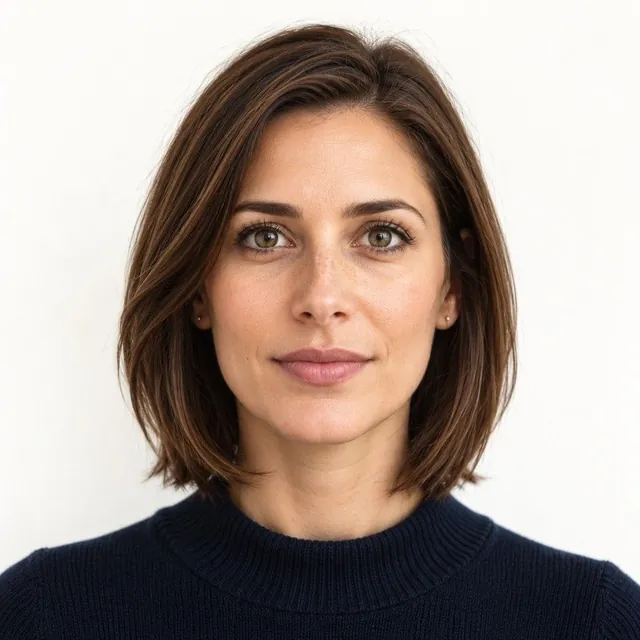
Can you smile in a passport photo?
Yes, for a US passport photo you can smile, as long as it isn’t exaggerated, your eyes are open and your mouth is closed. US visa (DS-160) and DV lottery photos are stricter: they need a neutral expression. A neutral face with a closed mouth works for all of them.
Expression rules by document
- US passport: a natural smile is fine; no exaggerated expressions; eyes open, mouth closed
- Online renewal: a natural expression with both eyes open; avoid showing your teeth
- US visa (DS-160): neutral expression
- DV lottery: neutral expression
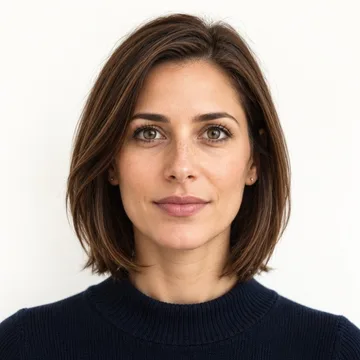
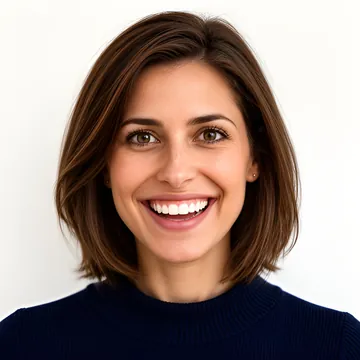
The safe choice
A relaxed, neutral face with your mouth closed and both eyes open meets every one of these rules, so it is the safest choice if you aren’t sure.
What counts as a natural smile
The passport page says you can smile, but you must avoid exaggerated expressions.
The State Department’s Foreign Affairs Manual is more specific. It says your expression should be natural. Normal, unexaggerated smiles are acceptable. Unusual expressions and squinting are not.
The example photos on the passport page show where the line is. A woman facing forward with a neutral expression is acceptable. A woman smiling with her mouth open is not.
Poses and expressions that get photos rejected
- Smiling with your mouth open
- Squinting, or having your eyes closed
- Tilting your head forward or to the side
- Sticking out your tongue, or covering your mouth with a hand
The State Department says unacceptable photos are the number one reason it puts passport applications on hold.
Children and babies
The rules for a child’s passport photo are stricter than for adults. The passport page says a child’s facial expression must be neutral.
Children must face the camera with their full face visible. A baby’s eyes don’t have to be fully open, but all other children must have their eyes open.
The examples also rule out a pacifier in the mouth and another person in the photo.
If you can’t hold a neutral expression
The State Department will accommodate you if you have difficulty facing forward or keeping your eyes open. You need a signed statement from your doctor or another medical professional.
Some disabilities, including loss of muscle control, make a natural expression hard. The Foreign Affairs Manual says such photos may be accepted.
What happens if your expression is wrong
When you renew online, the photo tool checks the basic requirements. If your photo isn’t acceptable, it tells you what to change, and you can try another photo.
An employee still reviews it later. If there is a problem, the State Department asks for a new photo by letter or email.
The DV lottery is stricter. The DV-2026 instructions say you may be ineligible if your entry photos don’t fully meet the rules. You also can’t reuse the photo from a prior year’s entry.
How to get the expression right
-
Face the camera
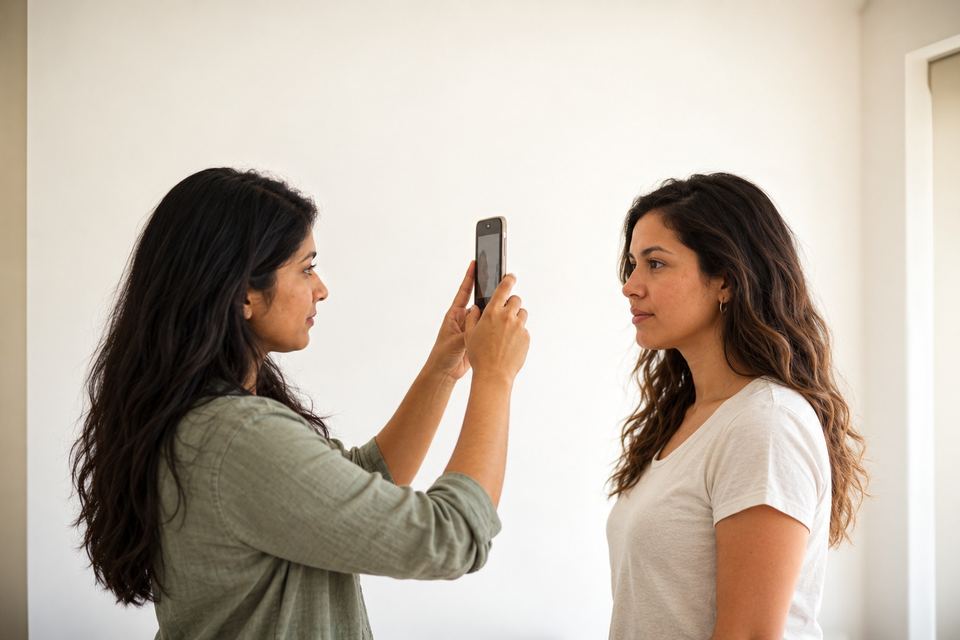
Stand several feet from the camera. Look straight at the lens with your head level, not tilted.
-
Close your mouth
Rest your lips together. A slight closed-mouth smile is fine for an adult passport, but not for a visa or a child’s photo.
-
Check before you send
Compare the photo with the rules above. PassportOwl checks each rule before you pay.
Smiling without squinting
A wide smile often narrows the eyes. The staff manual says squinting is not acceptable, even when a normal smile is.
The visa photo FAQ uses the same words. Odd expressions and squinted eyes are not accepted there either.
If you can’t open one or both eyes because of a medical condition, the staff manual says the photo may be accepted.
What a neutral expression looks like
The visa photo FAQ describes it as a neutral expression, with both eyes open, facing the camera directly. Neutral doesn’t mean a frown.
These are practical tips, not rules: relax your jaw, rest your lips together, and breathe out just before the shot. PassportOwl checks live that your eyes are open and your mouth is closed, so you can fix it before you take the photo.
Already have a photo? Check it free with the passport photo checker. Every rule in one place: passport photo requirements.
Questions
Can I show my teeth in a passport photo?
Keep your mouth closed. A closed-mouth smile is fine for a US passport.
Can I smile in my US visa photo?
No. Visa photos need a neutral expression.
Can I smile with teeth in my passport renewal photo?
No. The online renewal page says to use a neutral expression or natural smile and to avoid showing your teeth.
Can kids smile in passport photos?
No. The State Department says a child’s facial expression must be neutral, with the full face visible and facing the camera.
Can I smile in my DV lottery photo?
No. The DV instructions require a neutral expression with both eyes open. A photo that doesn’t fully meet the rules can make you ineligible.
Why was my passport photo rejected for my expression?
Common causes are an open-mouth smile, squinting, closed eyes or a tilted head. The Foreign Affairs Manual says unusual expressions and squinting are not acceptable.
Does a neutral expression mean I can’t smile at all?
For a visa, DV lottery or child’s passport photo, keep a relaxed, neutral face. For an adult US passport, a natural closed-mouth smile is allowed.
Can a smile get my photo rejected even with my mouth closed?
Yes, if it makes you squint or looks exaggerated. The staff manual says unusual expressions and squinting are not acceptable.
Sources: Passport photos - travel.state.gov , Photo requirements - U.S. Visas , 8 FAM 402.1 Passport photographs - Foreign Affairs Manual , Uploading a digital photo (online renewal) - travel.state.gov , Apply as a person with a disability - travel.state.gov , DV-2026 program instructions (PDF) - travel.state.gov , Photo frequently asked questions - U.S. Visas . Checked Oct 19, 2026. How we keep rules accurate